U.S. employment increased by 165,000 jobs in October, exceeding many analysts’ expectations.
Revisions to prior months suggest stronger job gains than initially reported. August's employment gain was revised upward from 133,000 to 186,000 jobs, while September’s gain was revised up from 29,000 to 60,000.
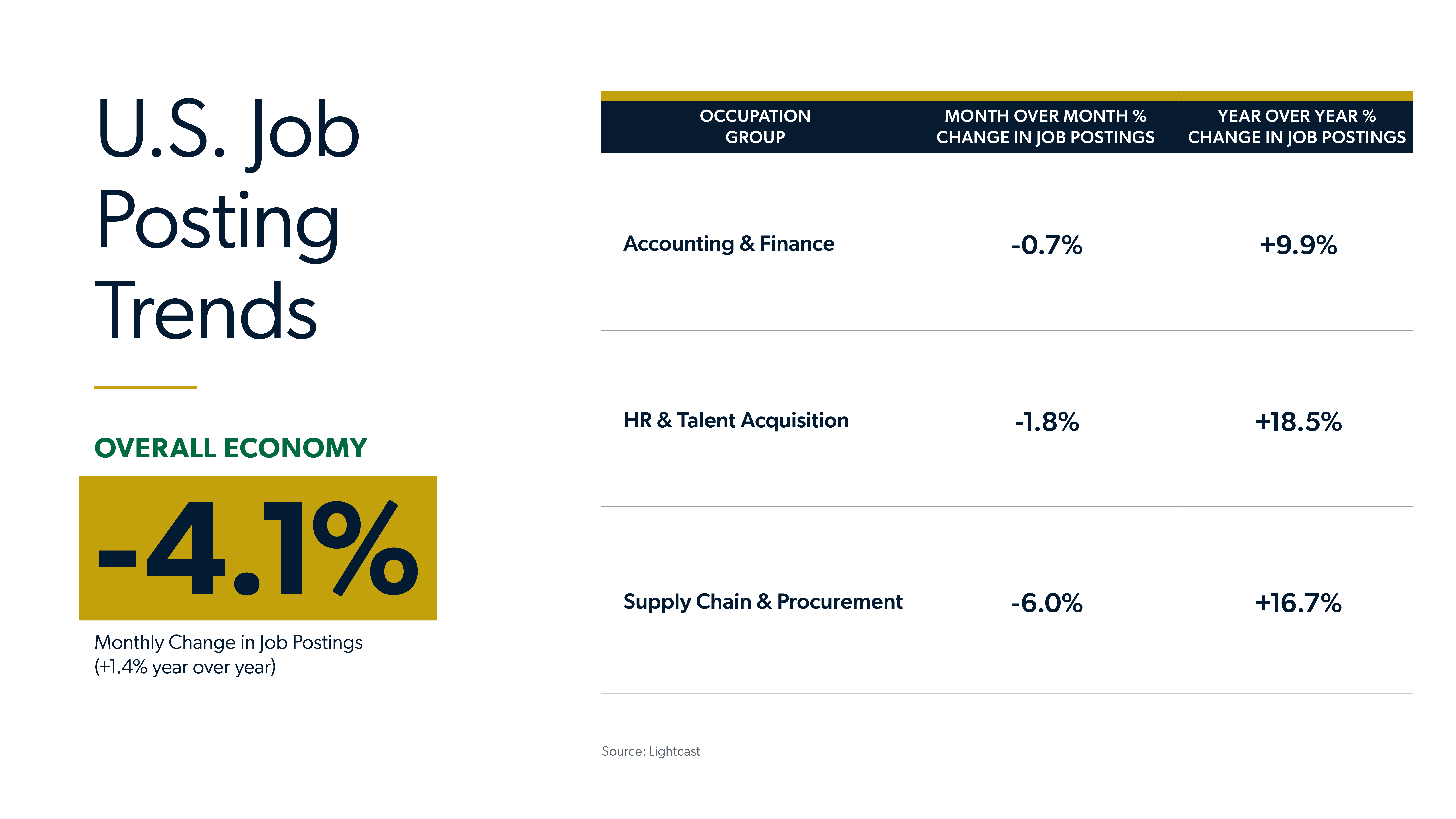
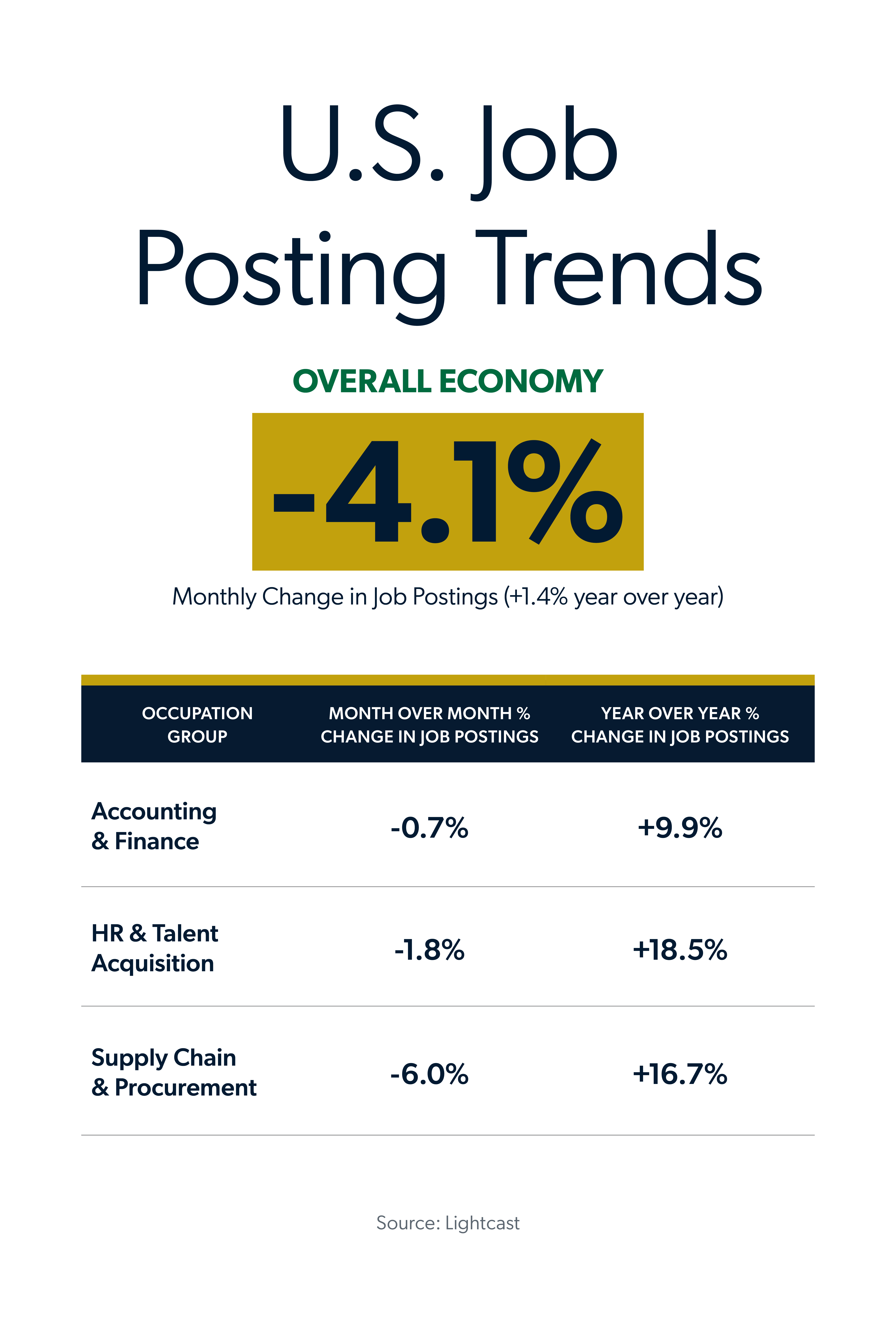
Among the job categories Aston Carter supports, job postings fell month over month across accounting and finance (-0.7%), HR and talent acquisition (-1.8%), and supply chain and procurement (-6.0%). Despite these monthly declines, job postings were up year over year in all three categories. Jobs with notable month-over-month increases in demand include tax analysts and specialists (+4,653 postings), tax managers (+2,034), auditors (+1,754) and compensation/benefits analysts (+732).
Average hourly earnings rose 3.1% in October. Wage growth outpaced inflation from May 2023 through March 2026 but has since fallen below the rate of inflation. As a result, inflation-adjusted, or "real,” earnings have declined, reducing the purchasing power of many consumers.
U.S. employment increased by 165,000 jobs in October, following an increase of 60,000 jobs in September. On a year-over-year basis, total employment is up just 0.6%.
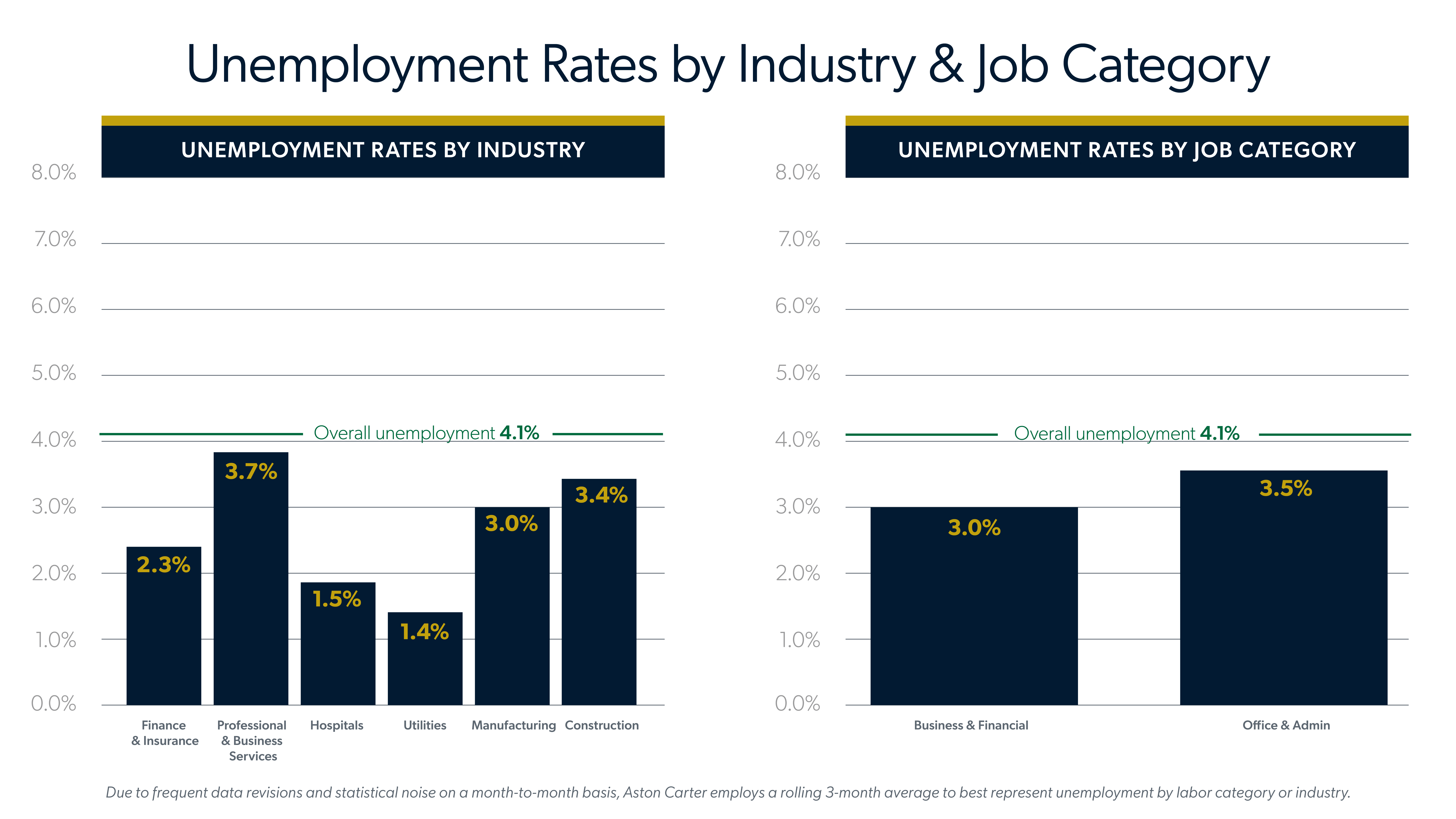
The unemployment rate fell slightly from 4.2% in September to 4.1% in October. Unemployment rates close to 4.0% suggest a relatively limited supply of available job seekers.
The labor force participation rate increased for the third consecutive month, rising from 61.8% in September to 61.9% in October. While the last three months have shown subtle improvement, the percentage of the population who is working or actively seeking work still lags the rate recorded throughout 2025.
Layoffs slightly declined from 1.8 million in August (revised up from 1.6 million) to 1.6 million in September. The number of quits increased from 3.1 million to 3.4 million. Quits and layoffs data lag one month behind other employment data.
Source: Bureau of Labor Statistics' Employment Situation Summary
It's encouraging to see stronger job gains in October, particularly after several months of modest hiring activity. As companies move into 2027, many are prioritizing hires tied to business transformation, operational efficiency and strategic growth initiatives rather than broad-based workforce expansion. Workforce demand frequently starts before a requisition exists, as transformation programs, technology investments and infrastructure projects often create talent needs well before formal hiring begins. With unemployment remaining relatively low, employers should expect continued competition for critical skill sets, especially in finance, procurement and other functions supporting large-scale initiatives such as data center development.
Lauren DeMarco-Stadtlander

Labor Market Analysis
Employment in Canada increased by 75,100 jobs in July before declining by 41,700 in August and 68,300 in September. As a result, Canada lost a net 34,900 jobs in Q3 2026, following a net increase of 88,300 jobs in Q2.
Read More www.astoncarter.com/en/insights/labor-reports/ca-economy-and-labour-market-brief-q3-2026
Labor Market Analysis
U.S. employment increased by just 29,000 jobs in September, following strong gains in August.
Read More www.astoncarter.com/en/insights/labor-reports/october-2026-labor-market-analysis
Labor Market Analysis
U.S. employment increased by 162,000 in August, exceeding expectations.
Read More www.astoncarter.com/en/insights/labor-reports/september-2026-labor-market-analysis US - EN